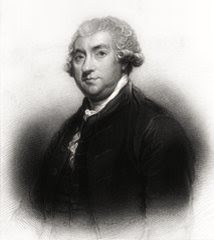
In Boswell’s London Journal of 1762-1763, he writes extensively about his annual income and necessary changes in budgeting.
At the time (as a youth), Boswell’s personal income was 200 pounds per year - about $400 - which was just enough to live as a gentleman. He tried to obtain a military commission which, depending on his rank, might have added another 20 or 30 pounds per year. Book sales (most aristocrats write books) may have added a bit more.
A client visited my office last year whose profession is to take care of the North American finances of an aristocratic European family. After asking many questions I realized that, aside from the figures, the aristocratic idea of “annual income” or “annual allowance” for has changed little since 1763.
When one asks about the wealth of an average person or even a wealthy businessman, the response invariably turns to net worth. For example, “He is worth 5 million dollars.” However, if you ask an aristocrat what he is worth, his response is never about net worth (which he probably doesn’t even know), but rather about the income that his assets produce. For example, “My income is 80,000 pound per year” This focus on income – as opposed to net worth – reveals fundamental differences between how aristocrats and commoners think.
For most Americans, investment preoccupation takes the form of a home – an American’s primary source of wealth. Homes are (except for recent overpriced years) good long-term investments.
First, there is the forced savings that comes with paying down a mortgage, which requires no mental effort. Then, there is the fact that when one sells a home, there are no capital gains taxes. And, despite brief periods to the contrary, homes have increased steadily in value over time. If the same funds were invested in bonds or dividend-paying stocks, the result would be taxable income, which to Americans is therefore the inferior form of investment.
Consider the following example:
Prosperous American FamilyU.S. property worth $2,000,000, which increases in value by 3% ($60,000) per year
$500,000 in U.S. Venture stocks, which increase in value by 10% ($50,000) per year
Young AristocratUK property worth $2,000,000, which increases in value by 3% ($60,000) per year
$500,000 in German corporate bonds earning 5%, or $25,000 per year.
$500,000 in Canadian preferred shares earning 5%, or $25,000 per year.
On paper, their annual change in net worth is exactly the same - $110,000. But, the American family employs $500,000 less to achieve the same gain, will pay no taxes on the capital gains of the property, and will pay no taxes on their shares until they sell. The aristocrat, on the other hand, will pay taxes on $50,000 of income every year. Why then, do aristocrats prefer large amounts of income-producing investments? Isn't the American way better?
It must be understood that aristocrats earn their money not only for themselves, but also for posterity. That is, they expect their wealth to improve the fortunes of their family for hundreds if not thousands of years to come. It also must be understood that they hope for the best but prepare for the worst.
In the example given above, the American family’s gain in net worth is completely a “paper profit,” which does not make daily life any easier. And, paper profits have the rude habit of evaporating just when you need the money most.
Aristocrats know that governments and laws change, that wars disrupt wealth, that revolutions change established order and that bubbles burst; therefore, they diversify their investments. At any given moment, they might be invested in rental properties, bonds, antiques, metals, and factories. And, these investments are never concentrated in a single country, but instead spread throughout the world, thereby minimizing political risk. Finally, most investments are expected to produce real income.
Years ago I visited one of the Rothschild manors in England, and was surprised to find that the huge estate has its own cricket pitch and pub. Just as interestingly, local residents are welcome to use both. The resulting cricket games and post-game celebrations not only create goodwill toward the wealthy family, but also presumably pay for a substantial portion of the estate’s annual taxes.
Since aristocrats don’t intend to suffer the ignominy of physical labor, passive income is a necessity. Passive income, though it is taxed, is tangible and real. Passive income can be used to conduct new business, to provide funds for additional investment, or simply for adventure. Passive income makes life easier today.
If you want to get ahead faster, think beyond your annual change in net worth. Think also about how much income your investments are earning. Ideally, over time your money (not you) should be providing the majority of the cash flow used for additional investing.
____
“Gentlemen Prefer Bonds.”Andrew Mellon
____



